

“Isn’t Etsy already too saturated? Is it even worth opening a shop anymore?”
If you’ve typed some version of that into Google lately, you’re not alone. It’s one of the most searched questions about Etsy right now, and honestly, it’s a smart one to ask before investing your time.
The problem is the answers you’ll find are all over the place. Half the content says Etsy is dying. The other half shows suspiciously perfect income screenshots with zero context.
Neither is the full picture.
So here’s the honest answer: yes, Etsy is still worth it in 2026, but only if you go in with the right strategy and realistic expectations. The moms who are building real income through Etsy right now are doing something specific. And once you see what that is, the “too saturated” fear gets a lot smaller.
If you’ve been looking for flexible ways to earn from home as a mom, without inventory, without a boss, and without experience, selling digital products on Etsy in 2026 is still one of the most accessible paths available. Let me show you exactly why, and exactly what it takes.
Is Etsy Too Saturated in 2026?
Yes, in some spots. But not everywhere. And that distinction matters a lot.
Etsy has millions of active sellers. Some categories are genuinely overcrowded: generic motivational printables, basic graduation cap designs, mass-produced jewelry. If you open a shop and sell the same product that 40,000 other sellers already have with optimized listings, you’re going to have a hard time.
But saying “Etsy is saturated” is like saying “the internet is saturated.” Technically true in the most crowded corners. Still completely untrue in thousands of specific niches.
Shops that struggle in 2026:
- Skip product research and create what they like instead of what buyers search for
- List one or two products and wait for sales to appear
- Use pretty titles instead of keyword-optimized ones
- Quit within the first 60 days before Etsy’s algorithm even learns their shop
Shops that grow in 2026:
- Use keyword research tools like eRank or Marmalead before creating anything
- Go narrow, not “planners” but “ADHD weekly planner for working moms” or “Ramadan meal planner printable”
- Build their listing count consistently — 20, 30, 50+ products over time
- Treat their shop like a business, not a passive income vending machine
The Etsy marketplace competition is real. But competition isn’t the same as impossibility. Saturation in the general market doesn’t mean saturation in your niche, with your specific product, targeting your specific buyer.
What the Numbers Say About Etsy in 2026
Let’s look at the actual data, not influencer vibes.
Etsy had over 91 million active buyers on the platform as of 2025. That is not a dying marketplace. That’s one of the largest concentrated audiences in the world of people who are specifically looking to buy unique, handmade, and digital products.
Etsy digital downloads, in particular, continue to see strong buyer demand. Searches for niche planners, Canva templates, Notion templates, wedding invitations, and printable trackers remain consistently high. The buyers are there. The question is whether your listing can earn its place in front of them.
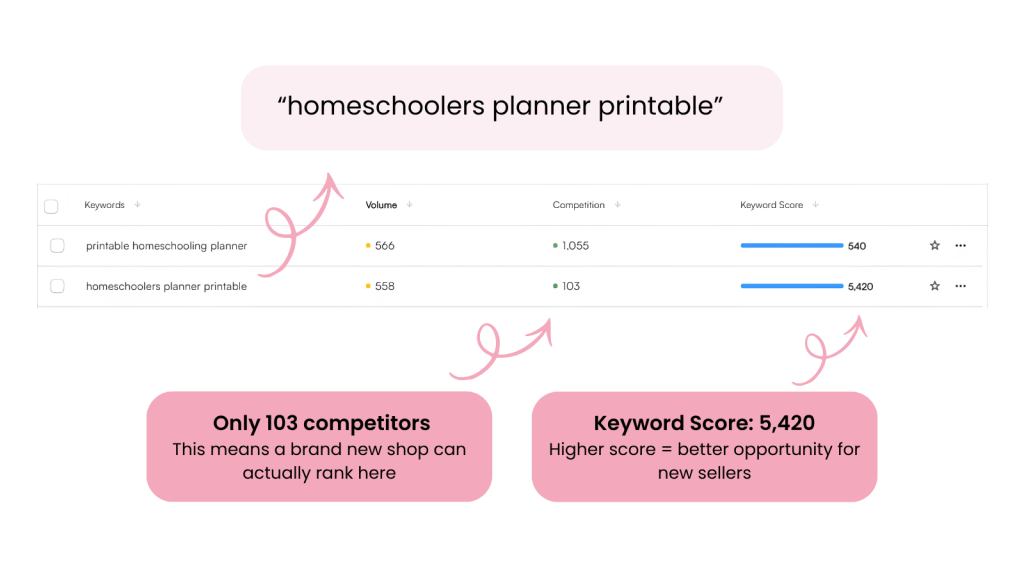
Etsy trends in 2026 show that the sellers seeing the most growth aren’t necessarily the ones with the best designs, they’re the ones with the best Etsy SEO and the most strategic niche selection.
Are Digital Products on Etsy Still Profitable?
Yes, and for moms specifically, they’re still the best starting point.
Here’s what makes Etsy digital products different from physical product shops:
No inventory. No shipping. No fulfillment. You create your file once, upload it, and Etsy automatically delivers it to every buyer after purchase. Whether you sell 1 or 100, the delivery process is identical. You’re not packing boxes at midnight.
Truly scalable Etsy passive income. A physical shop scales with your time — more orders means more work. A digital product shop doesn’t work that way. One planner template you made on a Tuesday afternoon can generate income for years while you’re at school pickup, making dinner, or sleeping.
Low barrier to entry. You need Canva (free plan works fine to start), basic keyword research skills, and time. That’s it. No factory. No supplier. No upfront stock purchase.
What’s still selling well in the Etsy digital products space in 2026:
- Digital planners and printable templates — especially niche-specific ones (ADHD planners, postpartum trackers, Ramadan planners, homeschool schedules)
- Canva templates — media kits, social media post templates, client welcome packets, content calendars
- Notion templates — for productivity, business tracking, content planning
- Printable wall art — affirmations, nursery art, minimalist home decor
- Wedding invitations and event stationery — still consistently high demand
- Kids and family printables — chore charts, reward charts, reading logs, birthday invitations
- Spreadsheet templates — budget trackers, expense logs, business income sheets
The niche insight no one talks about: The most profitable Etsy printables business in 2026 is rarely built on the most popular category. It’s built on a specific problem inside a popular category. “Printable planner” has 500,000 competitors. “Printable planner for moms recovering from burnout” has almost none, and the buyer who searches for that exact thing is much more likely to convert because you’ve described her situation precisely.
Proof That New Shops Are Still Making Sales
This is the question everyone really wants answered: are new sellers actually breaking through, or is it only established shops making money?
I researched this using EverBee’s Shop Analyzer tool, searching for digital product shops that opened in 2025 or 2026. The answer is yes, new shops are generating sales, some within their first few months.
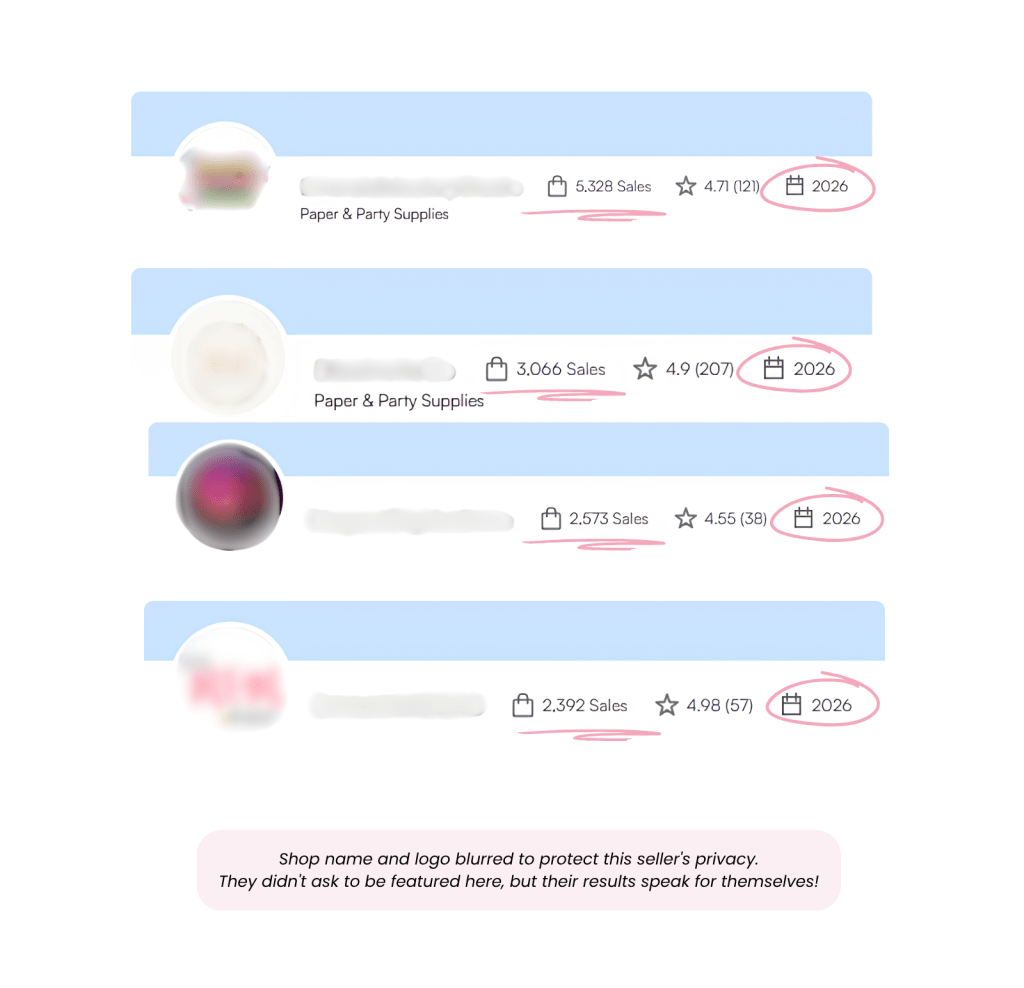
The patterns across successful new shops are consistent:
- They sell in specific, underserved sub-niches — not the top-level categories, but one or two levels deeper
- Their listing titles are keyword-first, not pretty-first — they write for Etsy search, not for aesthetics
- They have 20 or more listings — giving the Etsy search algorithm multiple entry points to surface their shop
- Their products solve a specific, real problem for a clearly defined buyer
New sellers can absolutely still break through in 2026. The path is narrower than it was in 2020. But it’s very much still open.
The Real Reason Most Etsy Sellers Fail
Here’s the honest thing most “start an Etsy shop” articles won’t say clearly:
Most new sellers fail because they skip product validation.
They open a shop, spend weeks designing something beautiful, list it with a vague title, and wait. Two or three weeks pass. No sales. They declare Etsy dead and move on.
What actually happened: they created a product without checking buyer demand first. The product might be gorgeous. But if nobody is searching for it on Etsy, it will never be found.
The sellers who succeed work backwards:
- Search first — find out what buyers are already typing into Etsy’s search bar using keyword research tools
- Check buyer demand — look at how many listings exist for that keyword and whether those listings have recent reviews (reviews = proof of purchases)
- Validate before creating — only build what the data says people want
- Optimize the listing — write your title, tags, and description around the keywords buyers use, not the words that sound nice
- Give it time — check stats after 60–90 days, adjust what isn’t working, and keep adding listings
This is not complicated. But it requires discipline to research before falling in love with your own idea.
Realistic Etsy Income for Beginners: What to Actually Expect
Let’s talk numbers honestly, because this is where most Etsy content fails beginners completely.
What you probably won’t earn:
- Passive income in week one
- Consistent sales in the first 30 days
- Full-time income in your first six months (for most beginners)
What is realistic:
- First sale within 30–90 days with well-optimized listings and in-demand products
- $100–$500/month by month 3–6 if you publish consistently and refine your listings
- $500–$2,000+/month within your first year if you treat it seriously, build your listing count, and do ongoing Etsy SEO
How much beginners make on Etsy varies enormously; your niche, product quality, listing optimization, and consistency all matter. Some sellers hit $1,000/month within six months. Others take longer. What separates them is almost never talent. It’s research, patience, and willingness to adjust based on data.
Time commitment when starting out: Expect 5–10 hours a week upfront, researching products, creating listings, writing descriptions, and learning Etsy SEO. Once your shop is established with 30–50+ listings, maintenance drops significantly, and the passive income aspect becomes much more real.
Can AI-Made Products Sell on Etsy?

Since this comes up a lot: yes, AI-assisted digital products can sell on Etsy — but with important caveats.
Etsy requires sellers to disclose when products are made with AI tools. And more importantly, the market for generic AI-generated art or content has become saturated quickly because the barrier to creation is so low, meaning everyone is making the same thing.
The AI products that sell well are ones where the human adds real value on top — a specific niche, thoughtful design, a problem that requires research to identify. An AI-generated planner that someone designed strategically for a specific audience can absolutely sell. Generic AI art dumped into a shop with no research behind it? Much harder.
Use AI as a tool, not a shortcut.
How to Actually Succeed Selling on Etsy in 2026
Here’s the Etsy seller strategy that works right now, not in theory, but in practice:
1. Pick a niche, not just a category. Don’t open a “printables” shop. Open a shop for moms of kids with ADHD, or for small business owners who need branded templates, or for brides planning DIY weddings. Specificity is your competitive advantage.
2. Do keyword research before you create anything. Use eRank’s free plan or EverBee. Type your product idea in. See how many people search for it monthly and how much competition exists. Look for keywords with decent search volume and lower competition. That’s your target.
3. Optimize every listing for Etsy SEO. Your title, all 13 tags, your description, and your listing photos all affect your Etsy search ranking. Fill in every field. Use long-tail keyword phrases in your tags, not just single words.
[Screenshot 3 goes here: Alura Listing Analyzer or EverBee listing detail view showing a well-optimized digital product listing — tags, keyword usage, review count. See Screenshot Instructions below.]
4. Build your listing count deliberately. More listings = more chances to appear in Etsy search. Don’t stop at five. Build toward 20, then 30, then 50. Each new listing is another door into your shop.
5. Give your shop enough time. The Etsy search algorithm takes time to learn and rank a new shop. Most sellers don’t see meaningful traffic in the first 30 days. Expect 3–6 months of consistent work before making strong judgments about what’s working.
6. Treat your shop like a business. Check your stats. Note which listings get views but no sales (listing problem — usually title or photos) versus listings with no views at all (SEO problem — usually keywords). Adjust. Repeat.
Frequently Asked Questions
Is Etsy still profitable in 2026?
Yes, for sellers who choose the right niche, optimize their listings for Etsy SEO, and publish consistently. The market is more competitive than in previous years, but buyer demand remains strong, particularly for digital downloads and niche printable products. Profitability depends on product research, listing quality, and patience.
Is Etsy too saturated in 2026?
Some categories are oversaturated — generic printables, basic mugs, mass-market jewelry. But thousands of specific sub-niches within those categories still have real buyer demand and manageable competition. The sellers who struggle are the ones competing on broad terms. The ones who succeed go narrow and specific.
Can beginners still make money on Etsy?
Yes, with realistic expectations. Most beginners see their first sale within 30–90 days with well-researched, well-optimized listings. Building consistent monthly income typically takes 3–6 months. A realistic income target for a beginner’s first year, with consistent effort, is $200–$1,000+ per month — not overnight, but absolutely achievable.
Are digital products still selling on Etsy?
Yes. Etsy digital downloads remain one of the strongest performing categories on the platform. Niche planners, Canva templates, Notion templates, wedding stationery, and printable trackers all continue to show strong buyer demand in 2026. The key is niche specificity; broad digital products face the most competition.
How much does it cost to start an Etsy shop?
New Etsy shops pay a one-time setup fee of $15–$29 USD (roughly ₱850–₱1,650 for Philippine sellers) introduced in 2024. After that, each listing costs $0.20, and Etsy charges a 6.5% transaction fee plus payment processing fees on every sale. For Philippine sellers, the processing fee is 4.5% + ₱25 per order, with a ₱100 deposit fee if your payout is below ₱5,000.
What are the best digital products to sell on Etsy in 2026?
Top-performing digital products in 2026 include niche printable planners and trackers, Canva templates for business owners and content creators, Notion templates for productivity and business management, printable wall art, wedding invitations, kids’ and family printables, and budget and finance spreadsheet templates. The most important factor isn’t the category — it’s how specific and targeted the product is within that category.
How long does it take to get your first Etsy sale?
Most sellers with well-optimized listings and in-demand products see their first sale within 30–90 days. Some niches move faster; others take longer. Consistent activity — adding new listings, refining titles and tags — speeds up the process. Shops that publish 20+ listings and optimize Etsy SEO reach their first sale faster than shops that publish a few listings and wait.
Is Etsy passive income?
Eventually, yes, but not immediately. Getting to passive income requires active work upfront: researching niches, creating products, writing optimized listings, and building your listing count. Once your shop has 30–50+ well-optimized listings in a niche with real buyer demand, the income becomes increasingly passive. Many sellers find that after the first 6–12 months, their shops generate consistent income with only a few hours of maintenance per week.
Is Etsy Still Worth It in 2026? The Bottom Line

Yes. But it’s not the wide-open market it was in 2020, and pretending otherwise would be doing you a disservice.
The sellers winning on Etsy right now aren’t always the most talented designers or the most creative people. They’re the most strategic. They researched before creating. They optimized before hoping. They gave their shops enough time to actually work. And they chose specific, problem-solving products over generic, pretty ones.
Etsy is still worth it in 2026, for the mom who goes in with a clear niche, does her keyword research, and builds consistently over 3–6 months. It is not worth it for the mom who lists two products, checks her stats daily for three weeks, and declares it dead.
If you’re ready to start, the first step isn’t designing a product. It’s opening eRank, typing your product idea into the keyword tool, and seeing what buyers are actually searching for. That’s your real starting point.
And when you’re ready to set up your actual shop? How to Sell on Etsy as a Side Hustle — A Beginner’s Guide for Moms
 The VA Mom Blog
Leave a comment